No video, no refund policy? — Know your rights as an online buyer.
Atty. Lea Mona P. Chu
Atty. Rhenelle Mae O. Operario
APRIL 2026
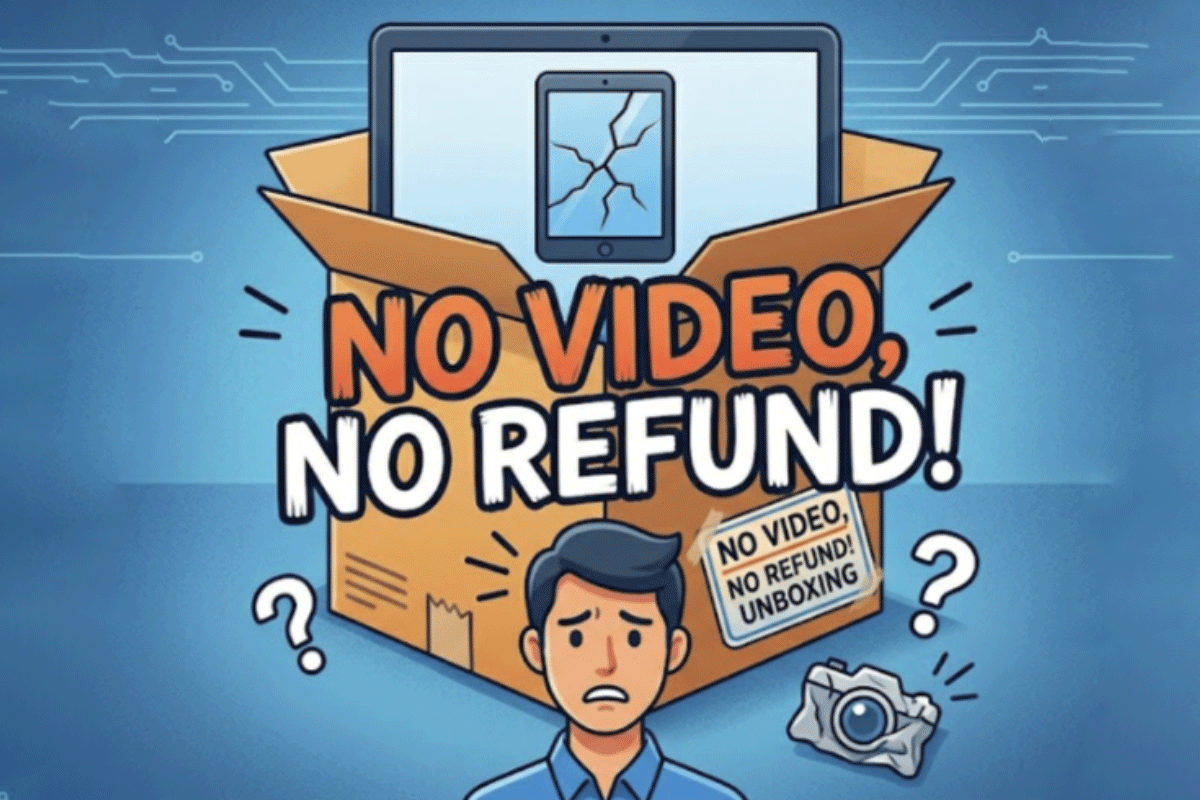
Did you just rip open that long-awaited parcel, the one you’ve been tracking for days, without hitting
“record”? There’s that tiny sticker stating “No video, no refund or exchange” or “Please take a video while opening your package.” But who has time for that when
excitement kicks in? You tear it open, only to find a defective item staring back at you. Now the seller says, “No video, no refund.” Sounds like game over, right?
It’s a frustrating situation many online buyers face, but here’s the catch: while sellers may impose such conditions, your rights as a consumer don’t automatically disappear just because you didn’t film the unboxing.
In practice, most e-commerce platforms provide internal dispute resolution systems to handle these issues. Buyers are often advised to file return or refund requests within a specific timeframe and provide supporting evidence, which may include photos or unboxing videos. While video documentation can strengthen a claim, it should not be viewed as the sole basis for consumer protection. Platform policies are meant to facilitate resolution, not to override the rights granted by law.
Under Consumer Act of the Philippines (Republic Act No. 7394), buyers are protected against defective products and misleading sales practices. This means that if an item is damaged, substandard, or not as advertised, you may still demand a refund or replacement—even without an unboxing video. Sellers cannot simply hide behind a “no video, no refund” policy to avoid liability. While such requirements may help in verifying claims, they are not absolute, and they must not defeat your statutory rights as a consumer.
Further, the Consumer Act of the Philippines also provides consequences for violations as provided under Article 41 thereof, thus:
It’s a frustrating situation many online buyers face, but here’s the catch: while sellers may impose such conditions, your rights as a consumer don’t automatically disappear just because you didn’t film the unboxing.
In practice, most e-commerce platforms provide internal dispute resolution systems to handle these issues. Buyers are often advised to file return or refund requests within a specific timeframe and provide supporting evidence, which may include photos or unboxing videos. While video documentation can strengthen a claim, it should not be viewed as the sole basis for consumer protection. Platform policies are meant to facilitate resolution, not to override the rights granted by law.
Under Consumer Act of the Philippines (Republic Act No. 7394), buyers are protected against defective products and misleading sales practices. This means that if an item is damaged, substandard, or not as advertised, you may still demand a refund or replacement—even without an unboxing video. Sellers cannot simply hide behind a “no video, no refund” policy to avoid liability. While such requirements may help in verifying claims, they are not absolute, and they must not defeat your statutory rights as a consumer.
Further, the Consumer Act of the Philippines also provides consequences for violations as provided under Article 41 thereof, thus:
“Article 41. Penalties. –
a) Any person who violates any of the provisions of Article 40 hereof shall, upon conviction, be subject to imprisonment of not less than one (1) year but not more than five (5) years, or a fine of not less than Five thousand pesos (P5,000.00) but not more than Ten thousand pesos (P10,000.00), or both such imprisonment and fine, in the discretion of the Court.
Should the offense be committed by a juridical person, the Chairman of the Board of Directors, the President, General Manager, or the partners and/or the persons directly responsible therefor shall be penalized. xxx” (Emphasis supplied.)
a) Any person who violates any of the provisions of Article 40 hereof shall, upon conviction, be subject to imprisonment of not less than one (1) year but not more than five (5) years, or a fine of not less than Five thousand pesos (P5,000.00) but not more than Ten thousand pesos (P10,000.00), or both such imprisonment and fine, in the discretion of the Court.
Should the offense be committed by a juridical person, the Chairman of the Board of Directors, the President, General Manager, or the partners and/or the persons directly responsible therefor shall be penalized. xxx” (Emphasis supplied.)
In the event legitimate complaints were denied as sellers refuse to cooperate or rely heavily on restrictive disclaimers like “no video upon opening,
no refund,” consumers can escalate the matter to the Department of Trade and Industry (DTI). The DTI handles disputes involving defective goods,
misleading advertisements, and unfair trade practices. Through mediation and enforcement mechanisms, the DTI can help resolve disputes and hold
erring sellers accountable.
At the same time, consumers should take proactive steps to protect themselves. Keeping order receipts, screenshots of listings, and chat conversations can significantly strengthen a claim. While unboxing videos are useful, they are not the only form of evidence. What matters most is timely reporting and proper documentation of the issue within the platform’s allowed period.
At its core, the right to return, refund, or replacement is about fairness and accountability. Consumers should not be trapped by one-sided disclaimers that attempt to limit responsibility. In a time where online shopping is driven by convenience, savings, and necessity—especially amid rising fuel costs and tighter budgets—knowing your rights ensures that affordability does not come at the expense of protection.
At the same time, consumers should take proactive steps to protect themselves. Keeping order receipts, screenshots of listings, and chat conversations can significantly strengthen a claim. While unboxing videos are useful, they are not the only form of evidence. What matters most is timely reporting and proper documentation of the issue within the platform’s allowed period.
At its core, the right to return, refund, or replacement is about fairness and accountability. Consumers should not be trapped by one-sided disclaimers that attempt to limit responsibility. In a time where online shopping is driven by convenience, savings, and necessity—especially amid rising fuel costs and tighter budgets—knowing your rights ensures that affordability does not come at the expense of protection.
*The views and opinions expressed are based on applicable laws, constitutional provisions, and/or jurisprudence in force at the time of writing, and do not constitute legal advice or an official stance on any political matter. Subsequent legal or factual developments may affect the relevance or applicability of the views and opinions herein expressed.