
Beyond the Celebration: Holding Misogyny Accountable in Public and Online Spaces.
Atty. Ariadne Kirsten E. Hornilla
Atty. Rhenelle Mae O. Operario
APRIl 2026
Last month marked the observance of Women’s Month, a period
intended to celebrate and empower women. Yet even as tributes filled
timelines and speeches praised equality, a more troubling reality
persisted, misogyny remains deeply embedded in our everyday life.
Recently, a government official drew flak and widespread attention online for making audacious and deeply inappropriate comments regarding his alleged sexual thoughts about a famous actress. This is especially troubling given that they were expressed in the course of his official duties. Disturbingly, this incident is far from isolated. It was simply another example of a pattern women know all too well.
On her way home from work in a crowded street, Sabrina* found herself the target of persistent catcalling and unsolicited comments from a group of men loitering nearby. As she attempted to ignore them and continue walking, one of the men escalated the situation by following her for several meters, making increasingly inappropriate and intimidating remarks. Feeling unsafe and humiliated, she sought refuge in a nearby convenience store.
Mariah*, a college student who regularly commutes by bus to her university in Manila, found herself in a deeply uncomfortable situation during one of her daily journeys. While seated, a man beside her deliberately positioned his elbow near her pelvic area. Despite her repeated attempts to shift away and create distance, the man persistently returned his elbow to the same inappropriate position, disregarding her evident discomfort. Feeling increasingly unsafe and violated, Mariah ultimately decided to alight from the bus to remove herself from the distressing situation.
Riri*, a social media content creator, shared a selfie of herself in a two-piece swimsuit while at the beach. Soon after, she discovered numerous lewd and unsolicited comments from male users, who exploited the anonymity of the platform to harass her. Faced with this barrage of inappropriate remarks, Riri felt compelled to delete her post.
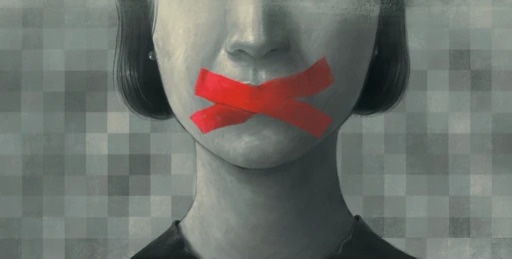
These are classic scenarios of the harassment women on a daily basis endure in their everyday lives. In the recent survey, almost 88%1 of women have experienced sexual harassment such as catcalling in the Philippines. Across public spaces, workplaces, schools, and even online platforms, women continue to endure lewd jokes, unsolicited comments, and degrading remarks, often dismissed as humor. This normalization of disrespect reveals a culture where some still expect women to tolerate indignity in silence.
Yet the law is clear: such behavior is not only unacceptable, it is also punishable.
The Philippine Constitution2 recognizes the vital role of women in nation-building, and over time, legislation has strengthened that principle. Laws such as the Magna Carta for Women (R.A. 9710)3 and the Anti-Violence Against Women and Their Children Act (R.A. 92624) affirm women’s rights and provide mechanisms for protection. Building on these, the Safe Spaces Act (R.A. 11313), or the “Bawal Bastos Law,” directly confronts gender-based harassment in all its forms.
The Safe Spaces Act casts a wide net. It penalizes unwanted sexual remarks and actions in streets, public spaces, workplaces, schools, and digital platforms. This includes catcalling, wolf-whistling, misogynistic slurs, persistent comments about appearance, intrusive gazing, and sexual jokes. More overt acts such as groping, flashing, and other lewd behavior, are likewise punishable. Importantly, the law also recognizes online harassment, covering abusive messages, non-consensual sharing of sexual content, cyberstalking, and other digital violations, to wit:
Recently, a government official drew flak and widespread attention online for making audacious and deeply inappropriate comments regarding his alleged sexual thoughts about a famous actress. This is especially troubling given that they were expressed in the course of his official duties. Disturbingly, this incident is far from isolated. It was simply another example of a pattern women know all too well.
On her way home from work in a crowded street, Sabrina* found herself the target of persistent catcalling and unsolicited comments from a group of men loitering nearby. As she attempted to ignore them and continue walking, one of the men escalated the situation by following her for several meters, making increasingly inappropriate and intimidating remarks. Feeling unsafe and humiliated, she sought refuge in a nearby convenience store.
Mariah*, a college student who regularly commutes by bus to her university in Manila, found herself in a deeply uncomfortable situation during one of her daily journeys. While seated, a man beside her deliberately positioned his elbow near her pelvic area. Despite her repeated attempts to shift away and create distance, the man persistently returned his elbow to the same inappropriate position, disregarding her evident discomfort. Feeling increasingly unsafe and violated, Mariah ultimately decided to alight from the bus to remove herself from the distressing situation.
Riri*, a social media content creator, shared a selfie of herself in a two-piece swimsuit while at the beach. Soon after, she discovered numerous lewd and unsolicited comments from male users, who exploited the anonymity of the platform to harass her. Faced with this barrage of inappropriate remarks, Riri felt compelled to delete her post.
These are classic scenarios of the harassment women on a daily basis endure in their everyday lives. In the recent survey, almost 88%1 of women have experienced sexual harassment such as catcalling in the Philippines. Across public spaces, workplaces, schools, and even online platforms, women continue to endure lewd jokes, unsolicited comments, and degrading remarks, often dismissed as humor. This normalization of disrespect reveals a culture where some still expect women to tolerate indignity in silence.
Yet the law is clear: such behavior is not only unacceptable, it is also punishable.
The Philippine Constitution2 recognizes the vital role of women in nation-building, and over time, legislation has strengthened that principle. Laws such as the Magna Carta for Women (R.A. 9710)3 and the Anti-Violence Against Women and Their Children Act (R.A. 92624) affirm women’s rights and provide mechanisms for protection. Building on these, the Safe Spaces Act (R.A. 11313), or the “Bawal Bastos Law,” directly confronts gender-based harassment in all its forms.
The Safe Spaces Act casts a wide net. It penalizes unwanted sexual remarks and actions in streets, public spaces, workplaces, schools, and digital platforms. This includes catcalling, wolf-whistling, misogynistic slurs, persistent comments about appearance, intrusive gazing, and sexual jokes. More overt acts such as groping, flashing, and other lewd behavior, are likewise punishable. Importantly, the law also recognizes online harassment, covering abusive messages, non-consensual sharing of sexual content, cyberstalking, and other digital violations, to wit:
“Section 4. Gender-Based Streets and Public Spaces Sexual
Harassment. -The crimes of gender-based streets and public
spaces sexual harassment are committed through any
unwanted and uninvited sexual actions or remarks against
any person regardless of the motive for committing such
action or remarks. Gender-based streets and public spaces
sexual harassment includes catcalling, wolf-whistling,
unwanted invitations, misogynistic, transphobic, homophobic
and sexist slurs, persistent uninvited comments or gestures
on a person’s appearance, relentless requests for personal
details, statement of sexual comments and suggestions,
public masturbation or flashing of private parts, groping, or
any advances, whether verbal or physical, that is unwanted
and has threatened one’s sense of personal space and physical
safety, and committed in public spaces such as alleys, roads,
sidewalks and parks. Acts constitutive of gender-based streets
and public spaces sexual harassment are those performed in
buildings, schools, churches, restaurants, malls, public
washrooms, bars, internet shops, public markets,
transportation terminals or public utility vehicles.
x x x
Section 12. Gender-Based Online Sexual Harassment. -Gender-based online sexual harassment includes acts that use information and communications technology in terrorizing and intimidating victims through physical, psychological, and emotional threats, unwanted sexual misogynistic, transphobic, homophobic and sexist remarks and comments online whether publicly or through direct and private messages, invasion of victim’s privacy through cyberstalking and incessant messaging, uploading and sharing without the consent of the victim, any form of media that contains photos, voice, or video with sexual content, any unauthorized recording and sharing of any of the victim’s photos, videos, or any information online, impersonating identities of victims online or posting lies about victims to harm their reputation, or filing, false abuse reports to online platforms to silence victims.”
What this means is simple: words alone can constitute harassment
when they are unwanted, sexual, and degrading.
In the case of the famous actress targeted by the official’s remarks, the law provides a clear remedy. Those statements which are public, sexual, and demeaning, fall squarely within the conduct prohibited by the Safe Spaces Act. Likewise, Mariah, Sabrina and Riri, who were all subjected to harassment, beyond simply removing themselves from the situation, now have the legal means to hold their perpetrators accountable under the Safe Spaces Act, reinforcing the principle that such deplorable actions will not go unchecked.
There are multiple avenues for filing a case under the Safe Spaces Act. If the incident occurs in a street or other public place within a city or municipality, the most expedient method is to lodge a complaint at the Anti-Sexual Harassment (ASH) Desk or the Violence Against Women and Children (VAWC) Desk of the local barangay, or at the nearest Philippine National Police (Women and Children Desk) or the Metro Manila Development Authority (MMDA). These offices are tasked with assisting victims in filing complaints against perpetrators of gender-based harassment. Further, the PNP and the MMDA are vested with authority to apprehend the perpetrators and enforce the law.
Alternatively, a complaint may be filed with the assistance of a lawyer through the Office of the City or Provincial Prosecutor. Depending on the penalty of offense committed under the Safe Spaces Act, the assigned prosecutor may or may not issue a subpoena directing the respondent (perpetrator) to submit a Counter-Affidavit and appear at the scheduled Preliminary Investigation. The handling prosecutor may allow parties to file their respective Reply-Affidavit or Rejoinder-Affidavit, should there be a need to do so. Once these steps are completed, the case is deemed submitted for resolution. Should the prosecutor’s office, upon evaluation, find that prima facie evidence exists establishing reasonable grounds for the conviction of the respondent, the prosecutor is mandated to file an Information before the competent court. Following the filing of the Information, the case shall advance to trial on the merits, wherein the court will examine the evidence and arguments presented by both parties to render a final adjudication.
In instances where the conduct of a Preliminary Investigation is not required particularly when the penalty prescribed for the offense under the Safe Spaces Act is imprisonment of less than one (1) year or a fine not exceeding Fifty Thousand Pesos (₱50,000.00), the prosecutor shall proceed with the immediate filing of an Information against the respondent before the appropriate court. Upon such filing, the case shall advance directly to trial on the merits, after which the court, upon evaluation of the evidence and arguments presented, shall render its final judgment. These procedures serve as fundamental guidelines in the initiation and prosecution of cases under the Safe Spaces Act.
Women’s Month should not end as a symbolic gesture. It should serve as a reminder that respect is not seasonal and that dignity is not negotiable. Laws exist to protect these principles, but real change requires collective vigilance: calling out misconduct, refusing to normalize harassment, and ensuring that those who violate these standards are held to account.
In the case of the famous actress targeted by the official’s remarks, the law provides a clear remedy. Those statements which are public, sexual, and demeaning, fall squarely within the conduct prohibited by the Safe Spaces Act. Likewise, Mariah, Sabrina and Riri, who were all subjected to harassment, beyond simply removing themselves from the situation, now have the legal means to hold their perpetrators accountable under the Safe Spaces Act, reinforcing the principle that such deplorable actions will not go unchecked.
There are multiple avenues for filing a case under the Safe Spaces Act. If the incident occurs in a street or other public place within a city or municipality, the most expedient method is to lodge a complaint at the Anti-Sexual Harassment (ASH) Desk or the Violence Against Women and Children (VAWC) Desk of the local barangay, or at the nearest Philippine National Police (Women and Children Desk) or the Metro Manila Development Authority (MMDA). These offices are tasked with assisting victims in filing complaints against perpetrators of gender-based harassment. Further, the PNP and the MMDA are vested with authority to apprehend the perpetrators and enforce the law.
Alternatively, a complaint may be filed with the assistance of a lawyer through the Office of the City or Provincial Prosecutor. Depending on the penalty of offense committed under the Safe Spaces Act, the assigned prosecutor may or may not issue a subpoena directing the respondent (perpetrator) to submit a Counter-Affidavit and appear at the scheduled Preliminary Investigation. The handling prosecutor may allow parties to file their respective Reply-Affidavit or Rejoinder-Affidavit, should there be a need to do so. Once these steps are completed, the case is deemed submitted for resolution. Should the prosecutor’s office, upon evaluation, find that prima facie evidence exists establishing reasonable grounds for the conviction of the respondent, the prosecutor is mandated to file an Information before the competent court. Following the filing of the Information, the case shall advance to trial on the merits, wherein the court will examine the evidence and arguments presented by both parties to render a final adjudication.
In instances where the conduct of a Preliminary Investigation is not required particularly when the penalty prescribed for the offense under the Safe Spaces Act is imprisonment of less than one (1) year or a fine not exceeding Fifty Thousand Pesos (₱50,000.00), the prosecutor shall proceed with the immediate filing of an Information against the respondent before the appropriate court. Upon such filing, the case shall advance directly to trial on the merits, after which the court, upon evaluation of the evidence and arguments presented, shall render its final judgment. These procedures serve as fundamental guidelines in the initiation and prosecution of cases under the Safe Spaces Act.
Women’s Month should not end as a symbolic gesture. It should serve as a reminder that respect is not seasonal and that dignity is not negotiable. Laws exist to protect these principles, but real change requires collective vigilance: calling out misconduct, refusing to normalize harassment, and ensuring that those who violate these standards are held to account.
FOOTNOTES
3. (19 August 2009), Republic Act 9710: The Magna Carta of Women. https://pcw.gov.ph/magna-carta-of-women/
4.Republic Act 9262. (8 March 2004). https://lawphil.net/statutes/repacts/ra2004/ra_9262_2004.html
*The views and opinions expressed are based on applicable laws, constitutional provisions, and/or jurisprudence in force at the time of writing, and do not constitute legal advice or an official stance on any political matter. Subsequent legal or factual developments may affect the relevance or applicability of the views and opinions herein expressed.